Leadership Fundamentals Series: The Importance of Building Quality into Your Organization

Whether in national defense, advanced technology, or complex systems engineering, embedding quality into the DNA of your organization from the outset leads to safer outcomes, clearer communication, stronger compliance, and more resilient operations.
In a recent installment of SPA’s Leadership Fundamentals Series, Dan Elliott, a military operations analyst in the SPA Strategic Division, led a compelling discussion on the enduring value of quality in high-stakes environments.
His insights emphasized a core truth – quality is not a phase or a checkpoint, it is foundational to mission success.

The Foundation and Evolution of Quality
“Quality is not something you do on a Thursday afternoon at 3:00. It’s not independent from anything,” Elliott remarked. “Everybody is in the quality department.”
Understanding the roots of quality management sharpens its relevance today. As detailed in the American Society for Quality’s (ASQ) History of Quality, modern quality principles were born during World War II, when reliability and performance became paramount for large-scale military production.
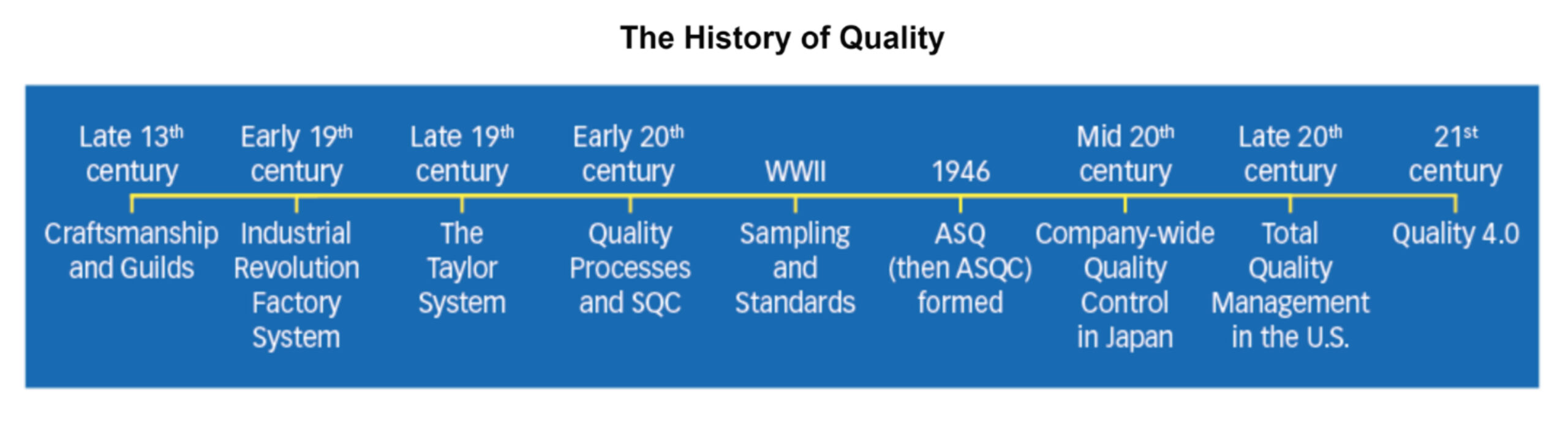
Today, we operate in the era of Quality 4.0, where digital tools, real-time data, and customer-centric models elevate both precision and responsiveness. Data-driven decisions, customer expectations, and risk management now take centerstage. Advanced frameworks such as Six Sigma and sector-specific standards like AS9000 (aerospace), and ISO 14000 (environmental management) guide organizations in systemizing quality across operations.
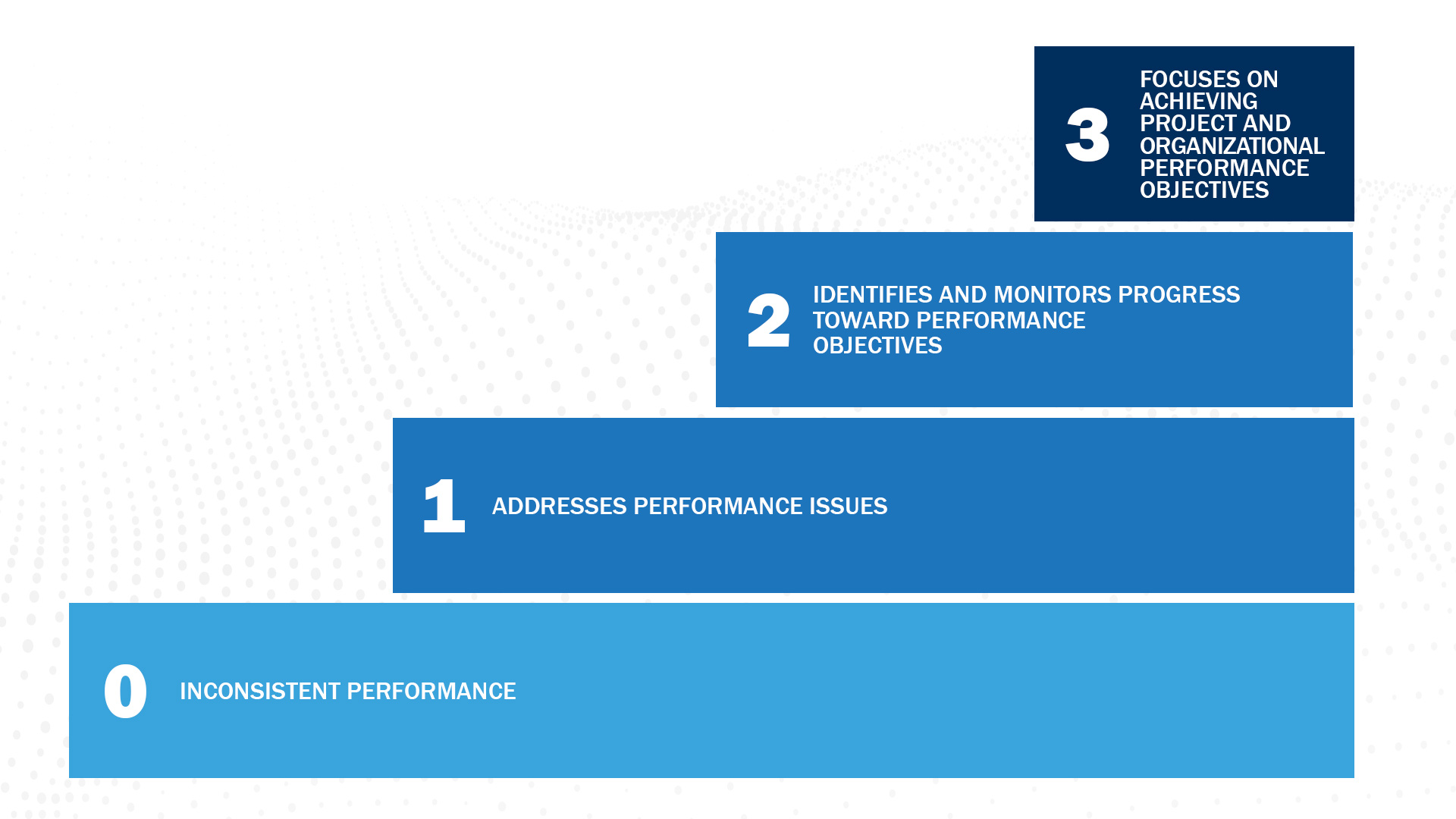
SPA integrates quality into every facet of our work. Our Quality Management System is ISO 9001:2015 certified, and we have been successfully appraised for CMMI for Services Maturity Level 3.
Embedding Quality in Programs and Processes
In the defense environment, where mission requirements grow more complex, defining and maintaining rigorous quality standards becomes vital. For DoD organizations, embedding quality ensures:
- Alignment with mission and warfighter requirements
- Compliance with defense acquisition, regulatory, and safety standards
- Increased system readiness, survivability, and performance
- Safety and reliability of products and services
- Assurance of environmental and security obligations
- Repeatable, auditable, and scalable internal processes
Whether managing weapon system reliability, advancing software development, or coordinating supplier deliverables, quality must be built in from the beginning – not inspected at the end.
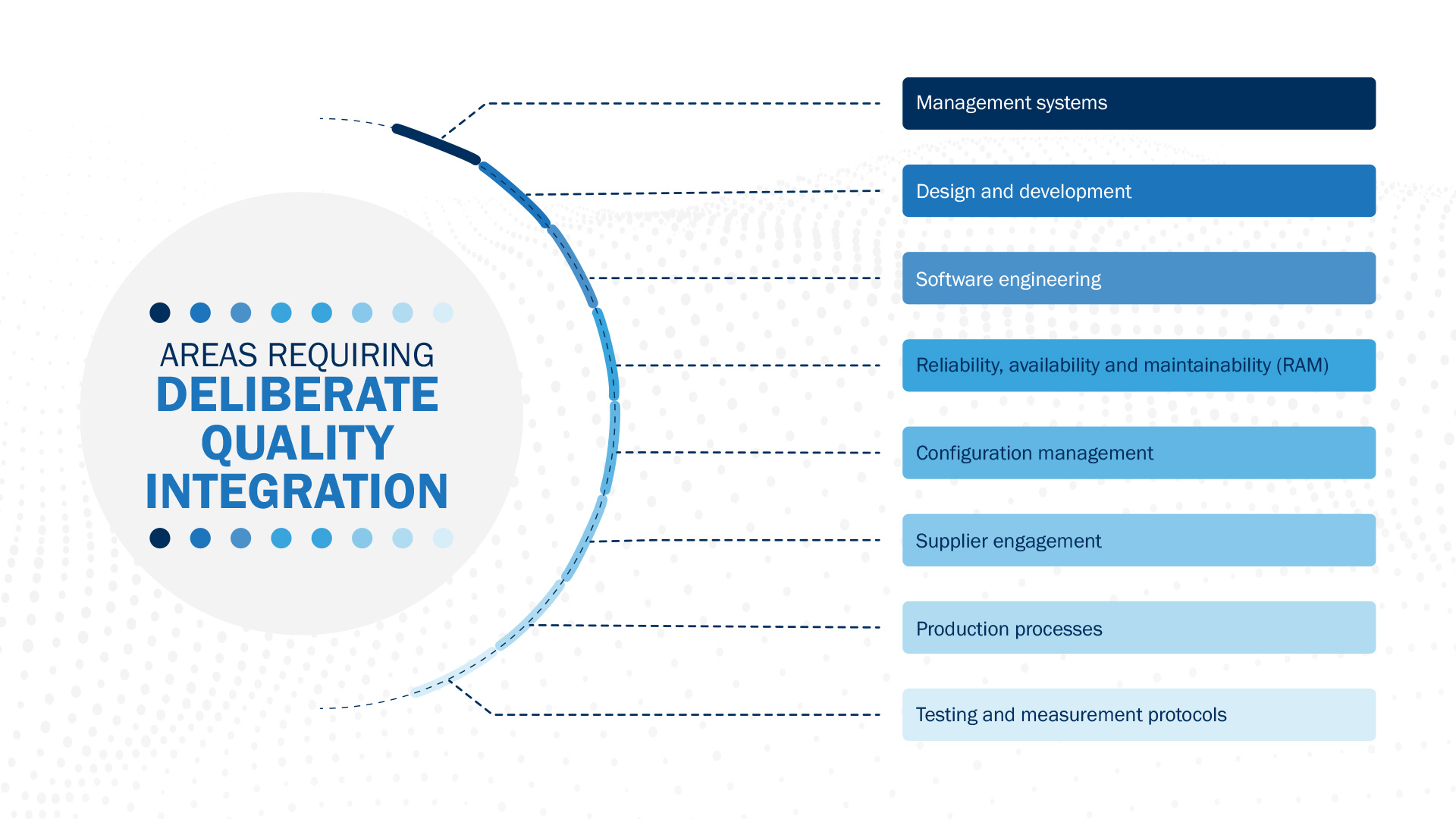
By embedding quality into planning and execution, government clients are better equipped to meet evolving mission demands with agility and assurance.
Architecting a Future-Ready Force
For doctrine to succeed, it must be matched by architectural choices that reflect operational needs and anticipate emerging threats. That includes building adaptable, survivable, and mission-aligned systems. It also requires organizational processes that enable rapid iteration and informed acquisition.
As Meteyer observed, success depends on “the right organizations, the right policies, and the right acquisition processes.” Building that foundation is as important as building the systems themselves.
Tailoring and Checklists: Tools for Smart Customization
Best practices are critical – but flexibility is what ensures relevance. Tailoring and checklisting are essential tools that allow program managers to adapt proven quality frameworks to the unique scope, risk, and mission objectives of each effort.
Tailoring enables teams to adjust requirements and deliverables and review rigor to the specific risk and scope of a program. This custom-fit approach ensures quality standards are applied intelligently and proportionally, rather than applying a generic framework.
Checklisting, meanwhile, offers a structured baseline. It codifies institutional knowledge, reduces ambiguity, and promotes consistency. Used together, tailoring and checklists help balance technical rigor, schedule constraints, and resource realities – especially critical in programs where stakes are high, timelines are tight, and integration across services or partners is required.
Consider the difference between two types of deliverables:
A crane hook lifting a 120,000-pound missile demands rigorous materials testing and structural assurance
A white paper or analytical tool calls for process discipline, peer review, and data validation.
Both require quality, but the definition and implementation must reflect the product’s unique context. Effective quality integration demands thoughtful judgment, technical understanding, and leadership engagement across the lifestyle.
Quality in Practice: Culture, Communication, and Leadership
While systems and standards are vital, it is organizational culture that sustains quality over time.

“Program managers are those who set the tone for the culture. This is something you can affect as a leader.”
Carol Evanoff, SPA Fellow for Program Management
Quality integration requires a collaborative approach grounded in contract requirements, where expectations are clearly communicated to balance cost, technical and schedule objectives. By creating an open environment and adhering to technical rigor, teams are empowered to address quality issues before they become major problems.
Working with clients in the DoD space often means collaborating with large primes with deeply entrenched and robust quality systems, while smaller firms often bring additional agility and innovation to the table.
Retaining and Transferring Knowledge
In long-term programs, knowledge loss can erode quality. When seasoned personnel move on, undocumented know-how often leaves with them.
“As program managers, it’s important to capture that knowledge to keep the quality thread from person to person as you pass the baton,” Evanoff emphasized.
The solution? Document the what, how, and why. This not only ensures continuity but strengthens future decision-making. Historical reasoning often remains relevant, even when specific practices evolve.
In-process reviews and robust documentation provide clarity and accountability. As Elliott put it: “Don’t just study theory. Put it into practice.”
By capturing the “why” behind every “how,” quality becomes both teachable and transferable.
Making Quality a Strategic Advantage
Quality is not a box to check – it is a strategic imperative that must be woven into every layer of an organization. It underpins every successful mission and every trusted partnership.
From aerospace hardware to strategic analysis, from large primes to agile startups, the same principle holds: build quality in from the start. Lead with excellence. Operate with discipline. Deliver with purpose.
Because in the national security space, quality is not just a goal – it’s how we achieve mission success, maintain trust, and deliver lasting impact.
SPA’s capability areas reflect the real-world complexity of multi-domain operations—where quality must be embedded at every layer. Across strategy, analysis, program execution, and technical support, we help clients achieve their mission objectives by building quality into every aspect of decision-making and delivery. Discover more here.
Subscribe to our newsletter
We respect your privacy.
[ Related Articles ]