The End of “Study First, Apply Later”
Military wargaming has long relied on historical precedent. That model is breaking down.
In Ukraine, battlefield innovation, drone tactics, decentralized execution, rapid adaptation, is evolving faster than doctrine. The gap between insight and application is shrinking.
For Ukrainian practitioners, that gap has already closed. Lessons are not studied after the fact, they are adapted in real time, often under active threat, as conflict reshapes itself day by day.
Ian’s work focuses on closing that gap. By integrating real-world conflict lessons into educational wargames, he ensures training environments reflect current operational realities, not outdated ones.
Wargaming must represent what is happening now, not what happened before.
In practice, that means translating battlefield developments, such as the rapid evolution of drone employment and decentralized decision-making, directly into educational wargames. In his presentation, Ian highlighted how these dynamics can be incorporated into game design in near real time, allowing military students to engage with the same challenges shaping today’s operational environment, not a historical approximation of it.
Data Is Changing the Standard
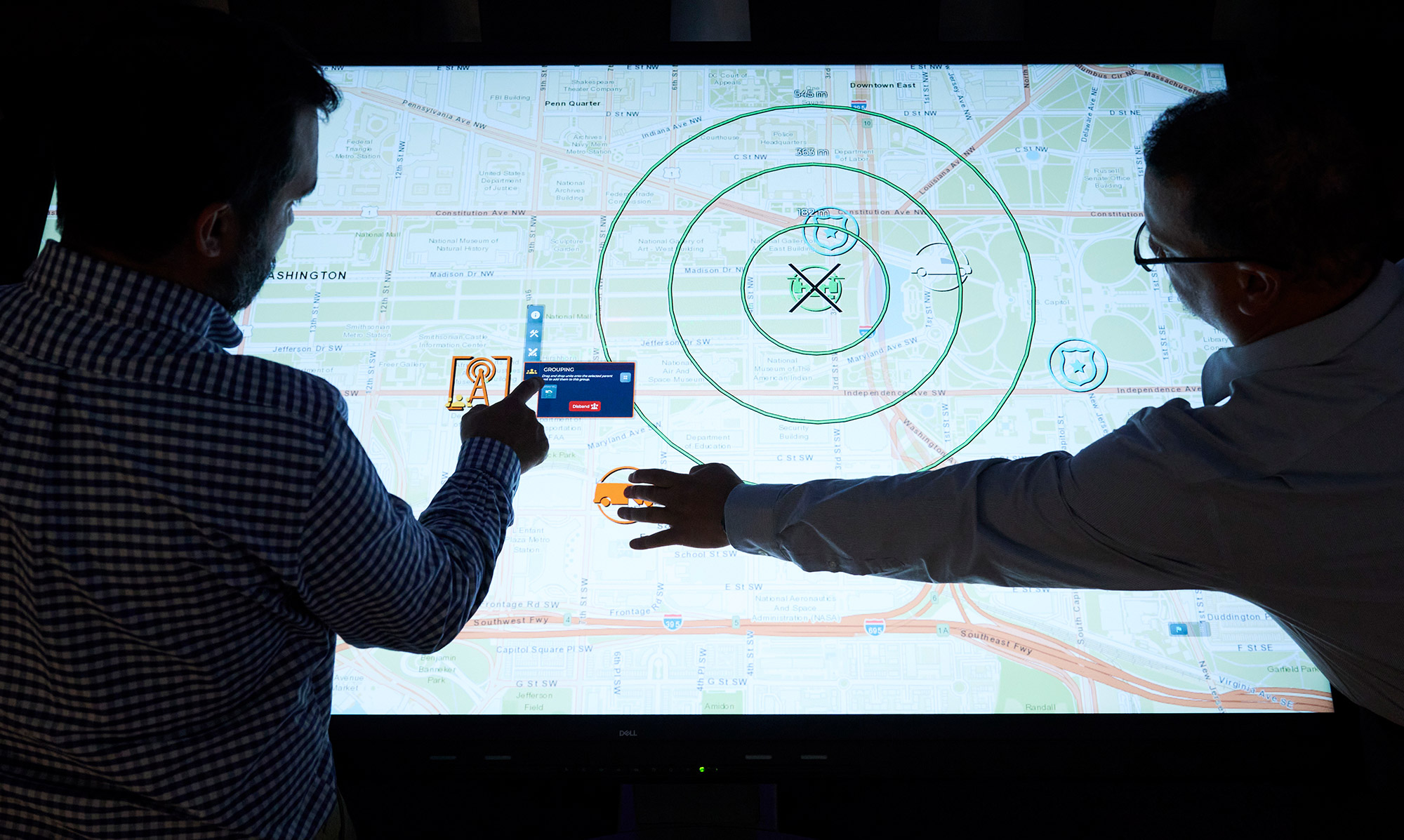
Modern conflict produces constant performance data, from drone feeds to mission timelines. Commanders now operate with real-time visibility into outcomes.
In Ukraine, this data is not theoretical; it is operational, feeding immediate decisions in contested environments.
Wargaming is being pushed in the same direction.
Simulations must move beyond qualitative insights to measurable, repeatable outputs that inform decisions. That requires structured systems, not just scenarios.
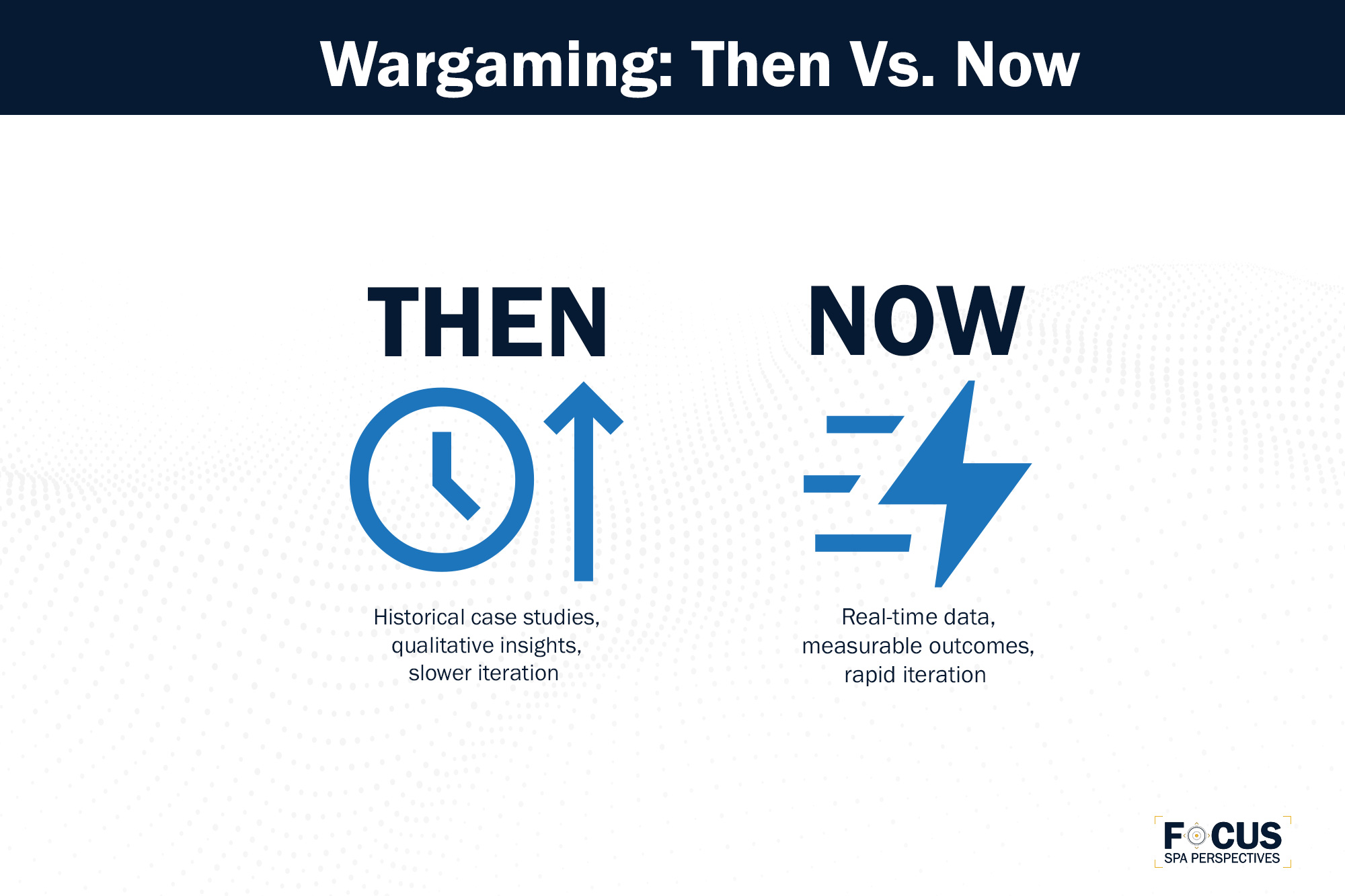
- Then: Historical case studies, qualitative insights, slower iteration
- Now: Real-time data, measurable outcomes, rapid iteration
Ian’s approach reflects this shift. By embedding real-world variables and performance-based outcomes into wargames, he translates complex environments into actionable learning.
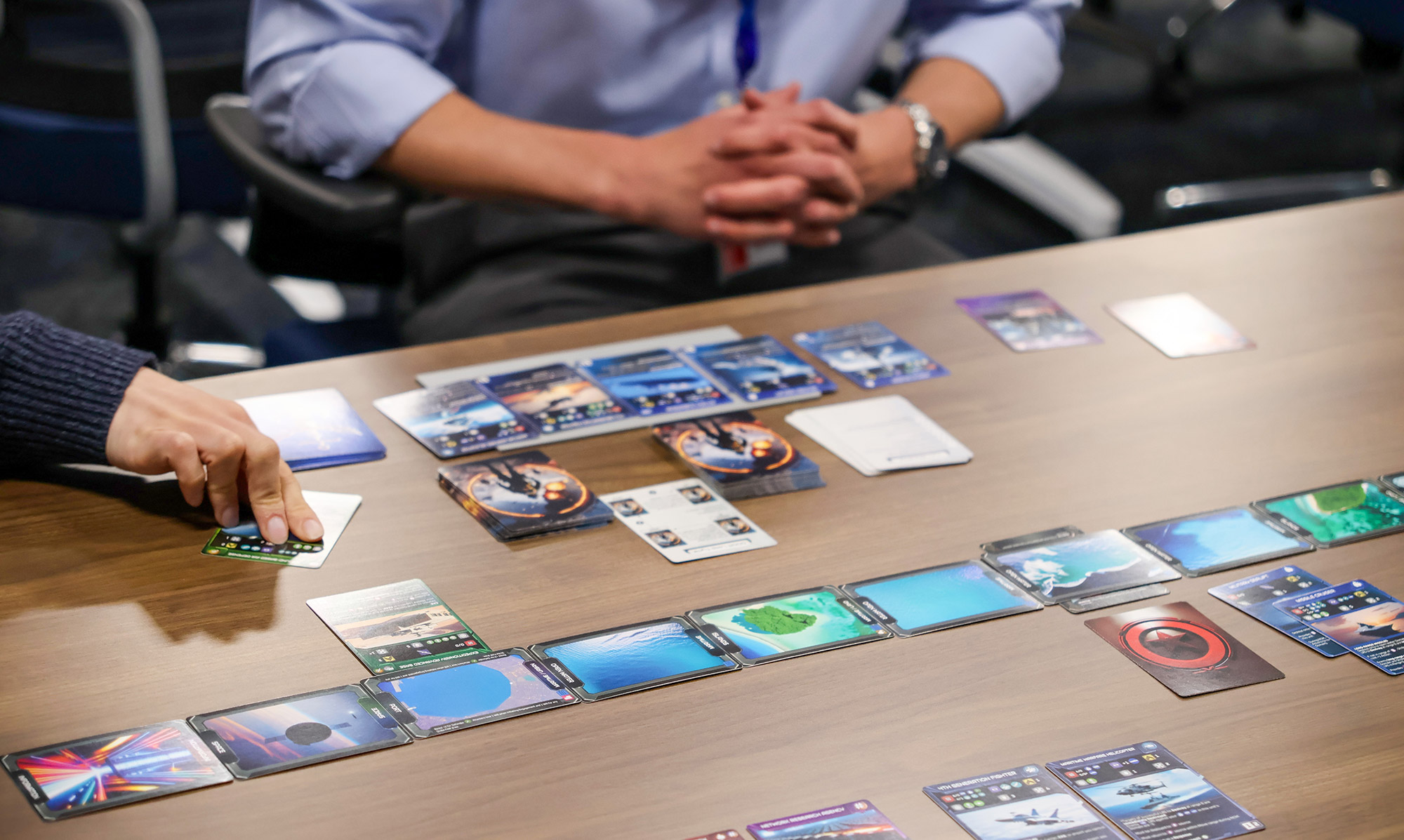
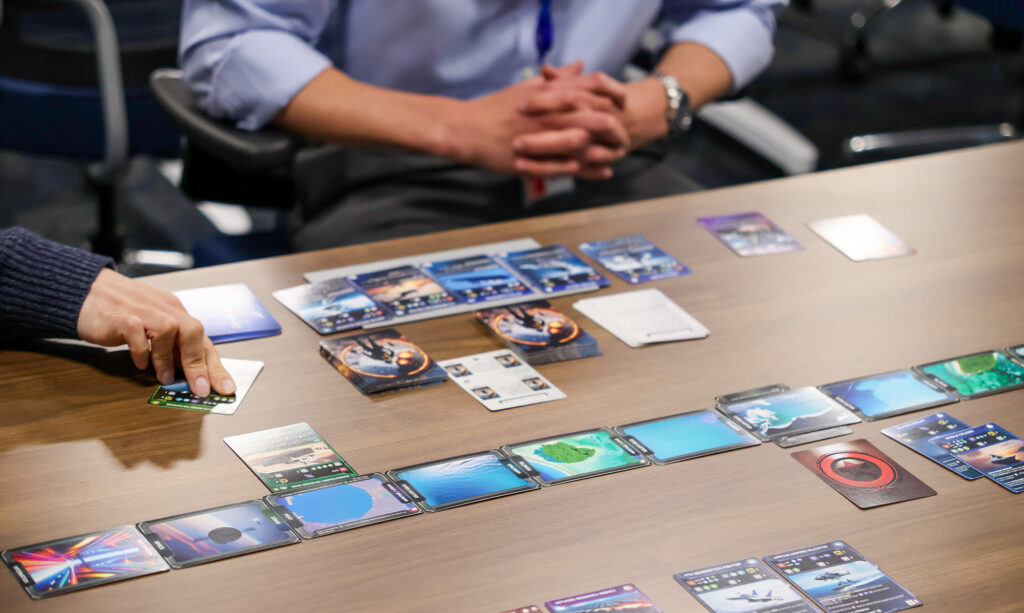
Gameplay in action from #ManeuverWarfare: The Card Game, where strategy, not destruction, determines victory. Designed by Ian Brown.
Wargaming Is Now Part of the Information Environment
It now extends beyond training. It shapes how conflict is understood.
Games transmit narratives, influence perception, and operate within the broader information environment. That makes fidelity critical.
These dynamics are not abstract. They are actively shaping how conflict is experienced, interpreted, and responded to in real time.
Wargames must be analytically rigorous and grounded in a real-world context. Anything less risks misrepresenting the environment they are meant to clarify.
The Real Implication: Speed or Irrelevance
The message is straightforward:
- If wargaming is slow, it is outdated
- If it is disconnected, it is ineffective
- If it does not produce actionable insight, it is noise
While this work reflects how SPA is advancing wargaming and analysis, many of the most immediate lessons shared at the conference came from Ukrainian practitioners applying these principles in real time, often under conditions far removed from the safety and stability of traditional training environments.
“If wargaming doesn’t move at the speed of conflict, it stops being useful.”
Ian Brown, Military Operations Analyst
SPA’s approach reflects this reality, connecting analysis, digital engineering, and mission application to deliver outcomes at operational speed.
Moving Forward
Wargaming remains essential, but its role has changed. It must keep pace with real-world conflict, translate complexity into clarity, and deliver insight that can be acted on immediately.
For practitioners like Ian, that means building systems grounded in current conflict, informed by data, and designed for faster decision-making, while continuing to learn from those applying these lessons in real time under far more demanding conditions.
Because today, the difference between insight and action is time.
And time is no longer a luxury.