00:00
Listen to this FOCUS: SPA Perspectives post here:
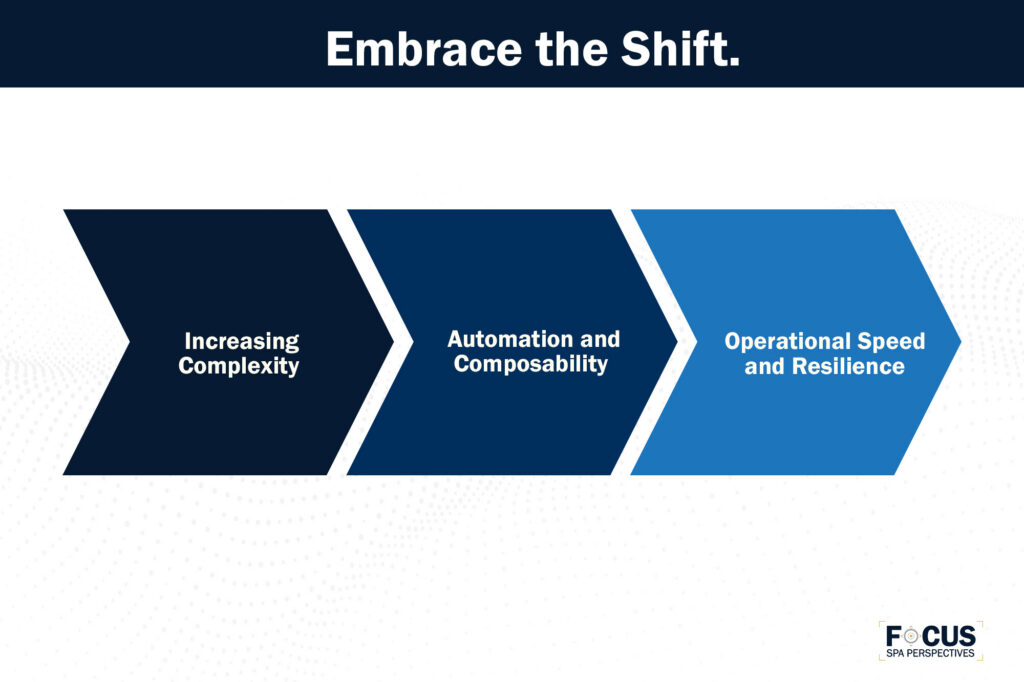
At WEST 2026, SPA Cyber Fellow Keegan Mills joined senior Navy and Marine Corps cyber leaders as a panelist for a discussion on “Future Cybersecurity Concepts 2027 and Beyond.” The conversation examined modernization priorities, risk management, and the accelerating pace of technological change. One reality stood out: complexity is no longer a byproduct of the mission; it is the mission challenge itself.
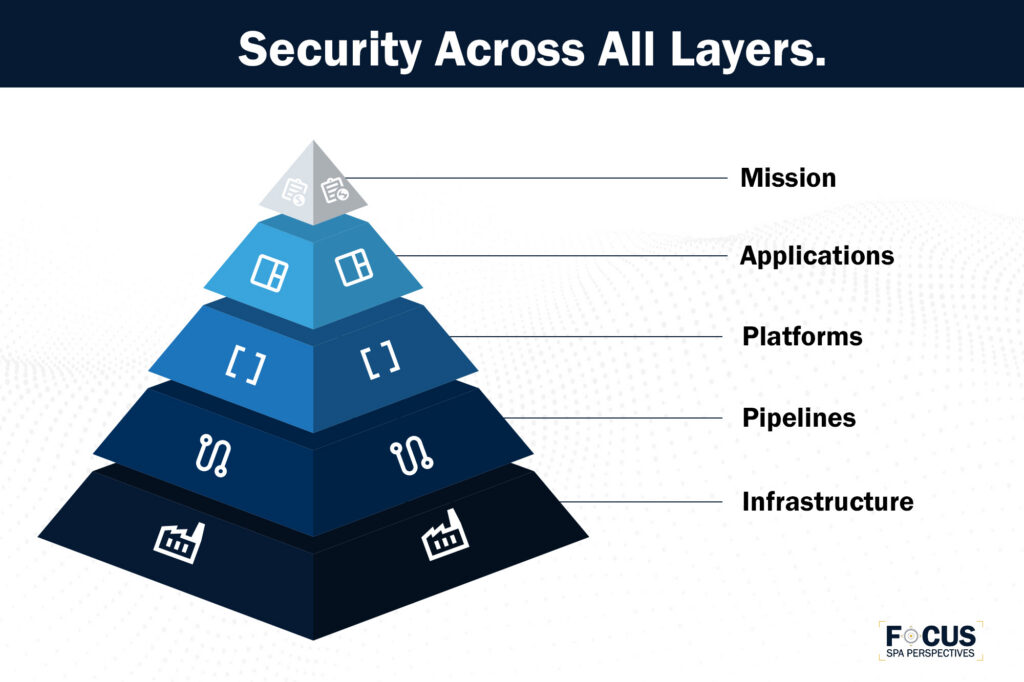
Cybersecurity is no longer solely about defending against intrusion. It is increasingly about managing systems so intricate that no single individual can fully comprehend them without technological augmentation. Networks now span missions, platforms, and organizations. Software delivery is continuous. Dependencies are layered and interwoven across operational environments.
Keegan Mills, SPA Fellow for Cyber and Information Warfare
That shift in perspective has significant implications for how organizations prepare for 2027 and beyond.
Much of today’s cyber terrain remains static. Systems are built, deployed, and left largely unchanged for extended periods. That stability gives adversaries time to observe, map, and analyze. Intelligence gathered once can remain useful for months or even years.
In traditional warfare, static forces are vulnerable. The same principle increasingly applies in cyberspace.
Looking ahead, cyber infrastructure must become more dynamic and composable, capable of real-time reconfiguration that reduces adversary insight and limits the usefulness of reconnaissance. When networks can shift and regenerate, mapping efforts lose value. In complex environments, maneuverability becomes a strategic advantage.
As systems grow more interconnected, manual processes alone cannot keep pace with mission demands. The direction is clear: speed, visibility, and risk management must evolve together.
Advanced tools, including automated risk assessments, accredited software factories, and continuously validated development pipelines allow organizations to accelerate delivery while maintaining rigorous security standards. Mature pipelines that embed security controls upstream reduce friction without reducing accountability.
As infrastructure evolves, workforce requirements evolve alongside it.
Historically, societies transition away from skills that no longer provide strategic advantage and develop new ones aligned to emerging technologies. The cyber workforce is undergoing a similar shift. The era of a single engineer building, configuring, and securing every layer of a system stack is fading.
Instead, advantage increasingly lies in integrating specialized expertise with advanced tooling, orchestrating complexity rather than attempting to manage it manually.
Cybersecurity in 2027 and beyond will not be defined by compliance frameworks alone. It will be defined by how effectively organizations manage complexity, operate at speed, and build infrastructure that adapts as quickly as the threats it faces.
Organizations that embrace this shift, investing in automation, composable infrastructure, and advanced tooling, will be best positioned to maintain advantage in an increasingly complex cyber domain.
We respect your privacy.
[ Related Articles ]