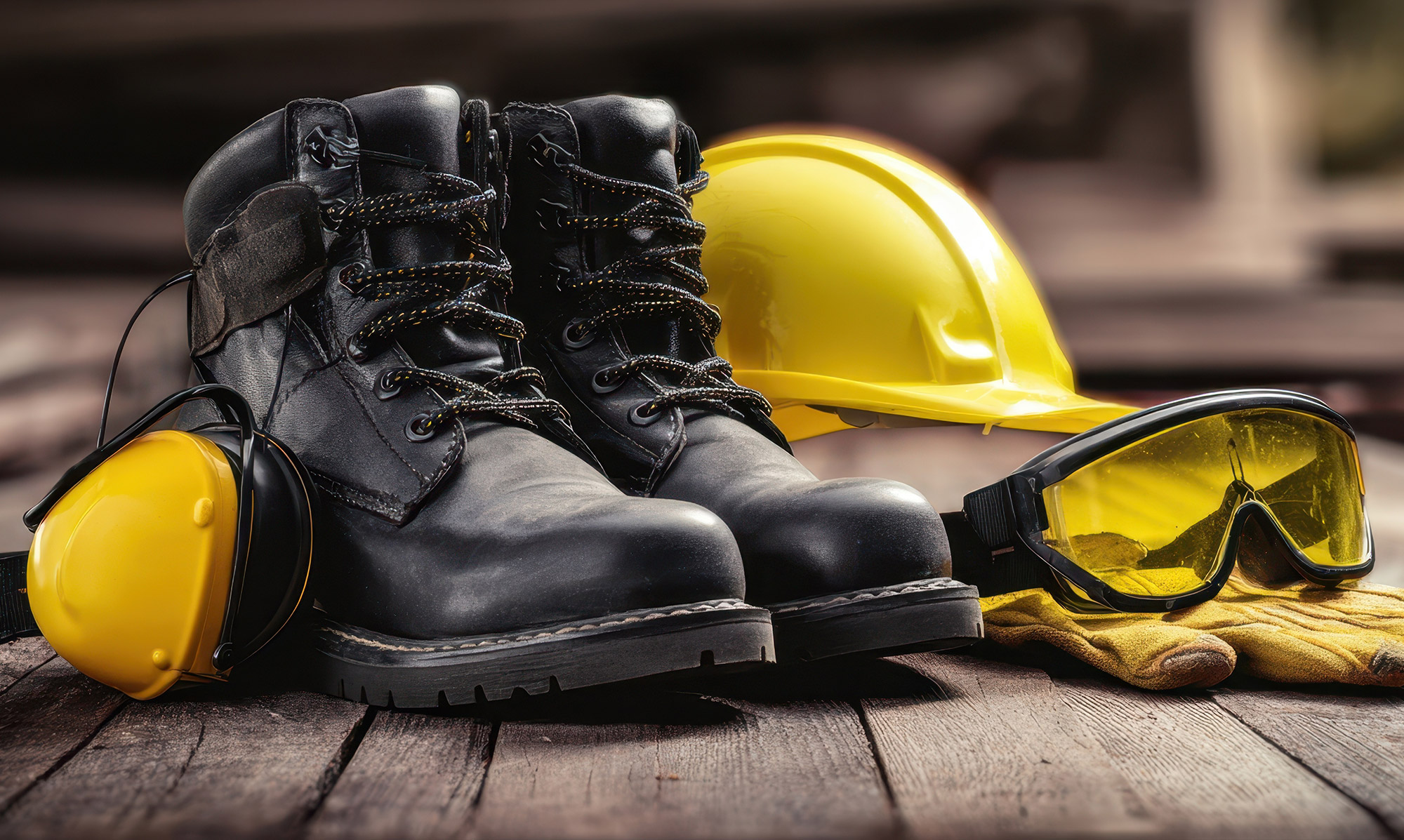
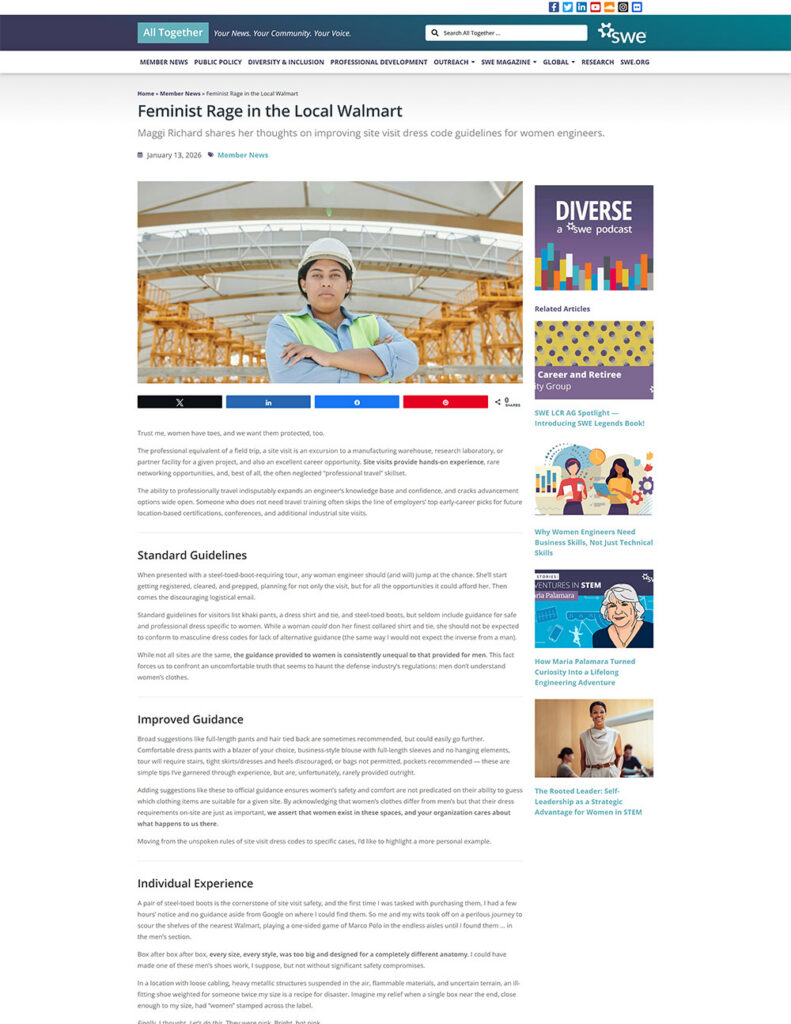
When Margaret “Maggi” Richard evaluates a piece of high-stakes equipment, she isn’t just looking at the hardware; she is looking for the friction points where a system fails its operator. Whether it is a glove that blunts a medic’s dexterity or a respirator mask that fails to seal against a small face, these are more than ergonomic inconveniences. In the language of systems engineering, they are potential failure points.
In recognition of Women’s History Month, we are highlighting Maggi’s contributions and perspective on how human-centered systems engineering can strengthen safety and performance across the modern workforce. Maggi recently shared these insights in an article published by the Society of Women Engineers (SWE), one of the leading professional organizations advancing women in engineering.
As a veteran of submersible operations and flight testing, Maggi has seen firsthand how equipment designed for a “default” user can compromise safety in extreme environments. Now, as a systems engineer at SPA, she is helping drive a shift in how we think about procurement and design standards, arguing that if a tool does not fit the person tasked with using it, the system itself remains incomplete.
The Problem of the “Default” Operator
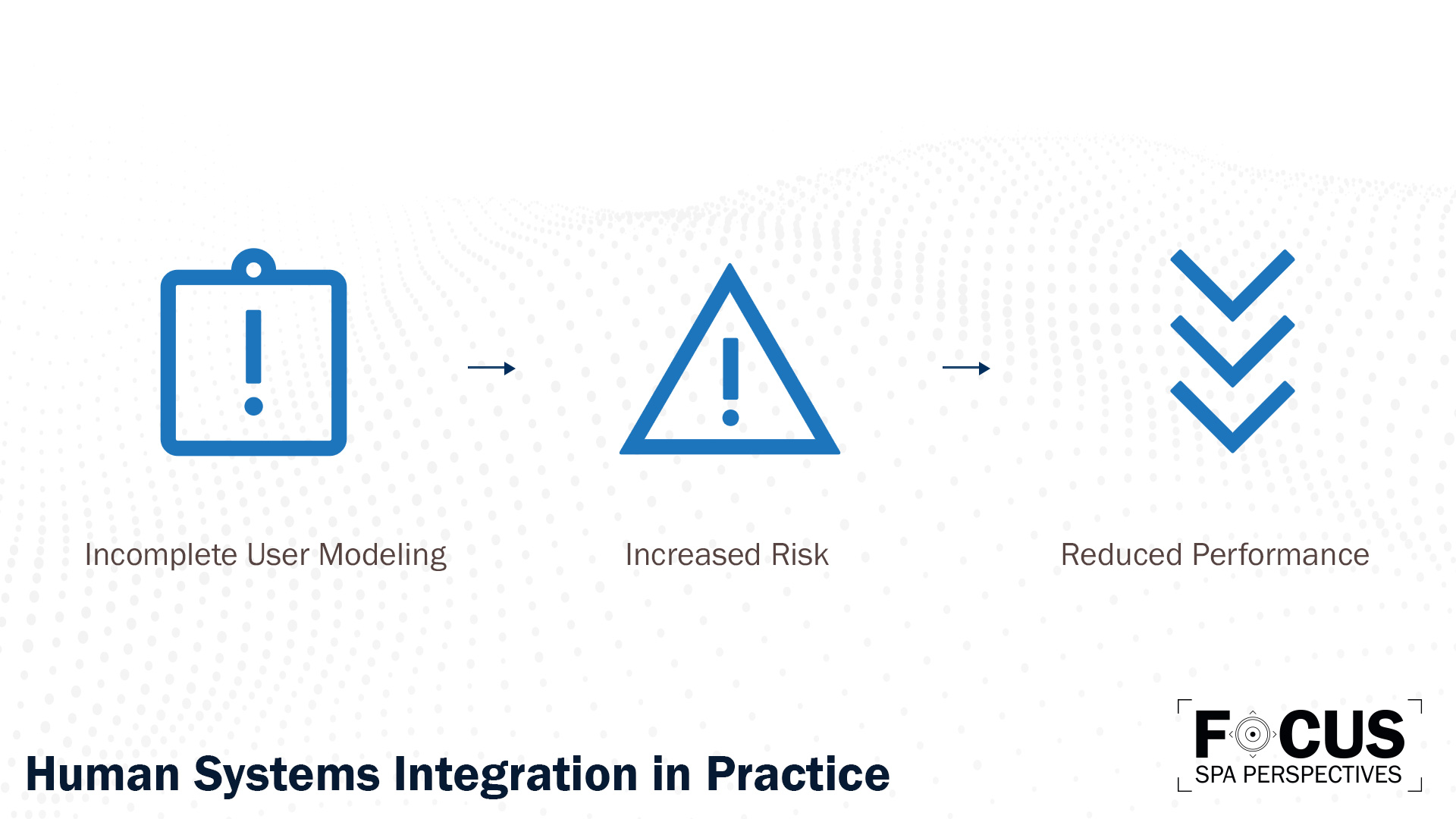
For decades, much of the data driving Personal Protective Equipment (PPE) design has relied on a “Default Male” anthropometric model—a legacy “ghost in the machine” that often fails to account for the full range of today’s operational workforce. Anthropometrics—the science of measuring human body sizes, shapes, and proportions—forms the foundation for how equipment is sized and designed to fit its users. When design requirements are built around an outdated average, they introduce a quiet but persistent form of technical debt.
Maggi’s work reframes human-centered design not as a social initiative, but as a matter of requirements discipline. By expanding the data sets used in the design phase, engineers can prevent “design drift”—the gradual departure from the actual needs of the end user.
“If the equipment designed to keep you safe doesn’t fit your body, then it isn’t truly protective equipment.”
Assistant Program Manager, Systems Engineer, Maggi Richard
Systems Engineering as a Solution
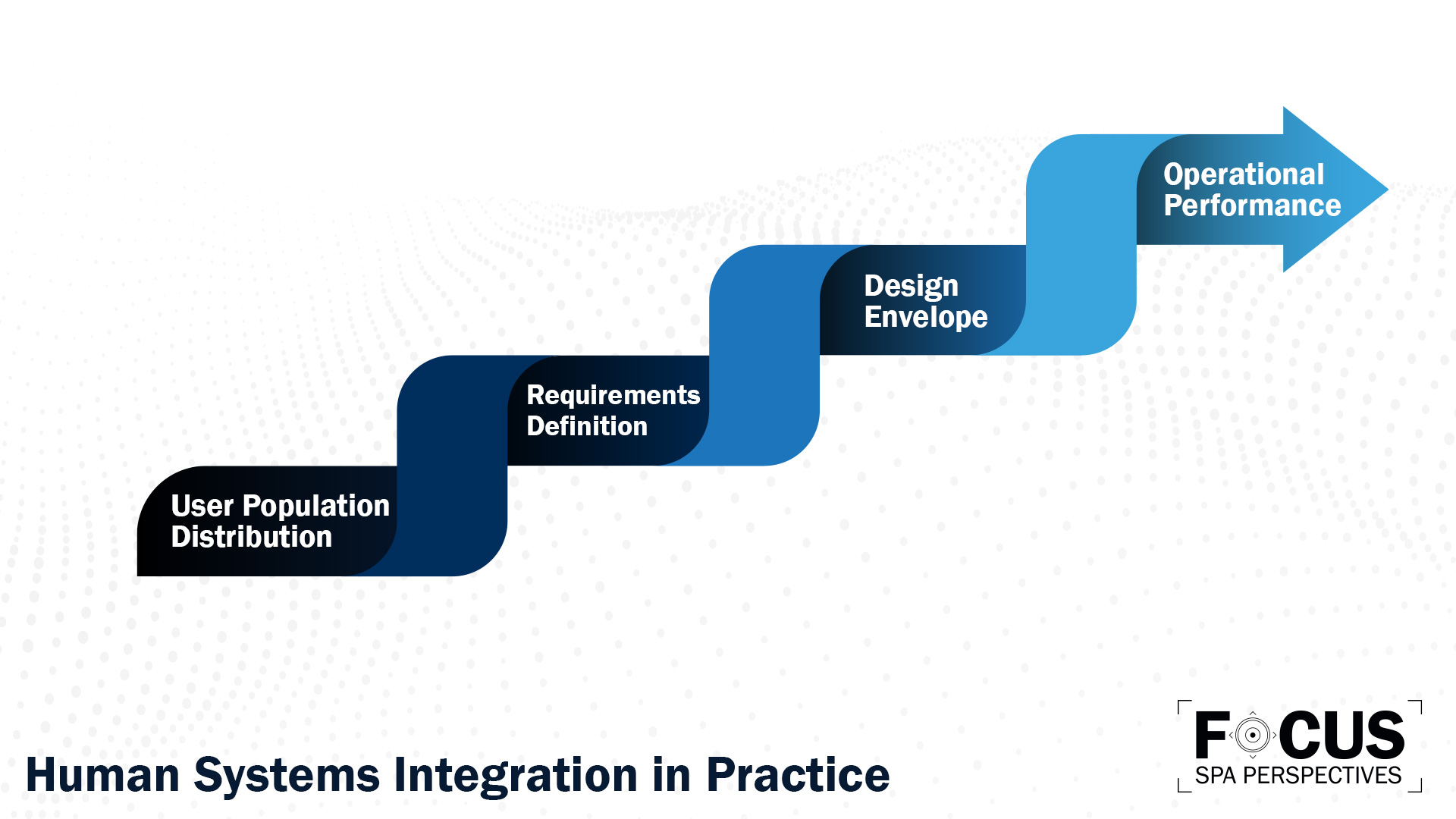
Maggi’s perspective draws on an interdisciplinary background in mechanical engineering and accessibility research, along with her work supporting complex defense programs since joining SPA in 2021. Her approach integrates these human factors directly into the systems engineering lifecycle. By treating the operator as a core component of the total system, her methodology provides actionable insights for program managers and engineers who may have previously viewed dress codes or equipment specifications as secondary considerations.
Through the lens of digital systems engineering, SPA is able to model representative populations with greater precision. This allows teams to “stress-test” equipment against a wide spectrum of body types before a single physical prototype is ever manufactured—an approach that reflects SPA’s broader work in Digital Systems Engineering.
Strengthening the Mission
Ultimately, Maggi argues that engineering for the full workforce is a force multiplier. It reduces operational risk, improves efficiency, and strengthens the reliability of the entire mission architecture. Expanding design assumptions is not a departure from a mission-focused mindset; it is a necessary evolution of it.
By centering the human-machine interface, the engineering community ensures that even the most sophisticated technology is never sidelined by a simple failure of fit.
- Complete user modeling strengthens safety
- Requirements discipline prevents design drift
- Human-centered systems improve operational performance