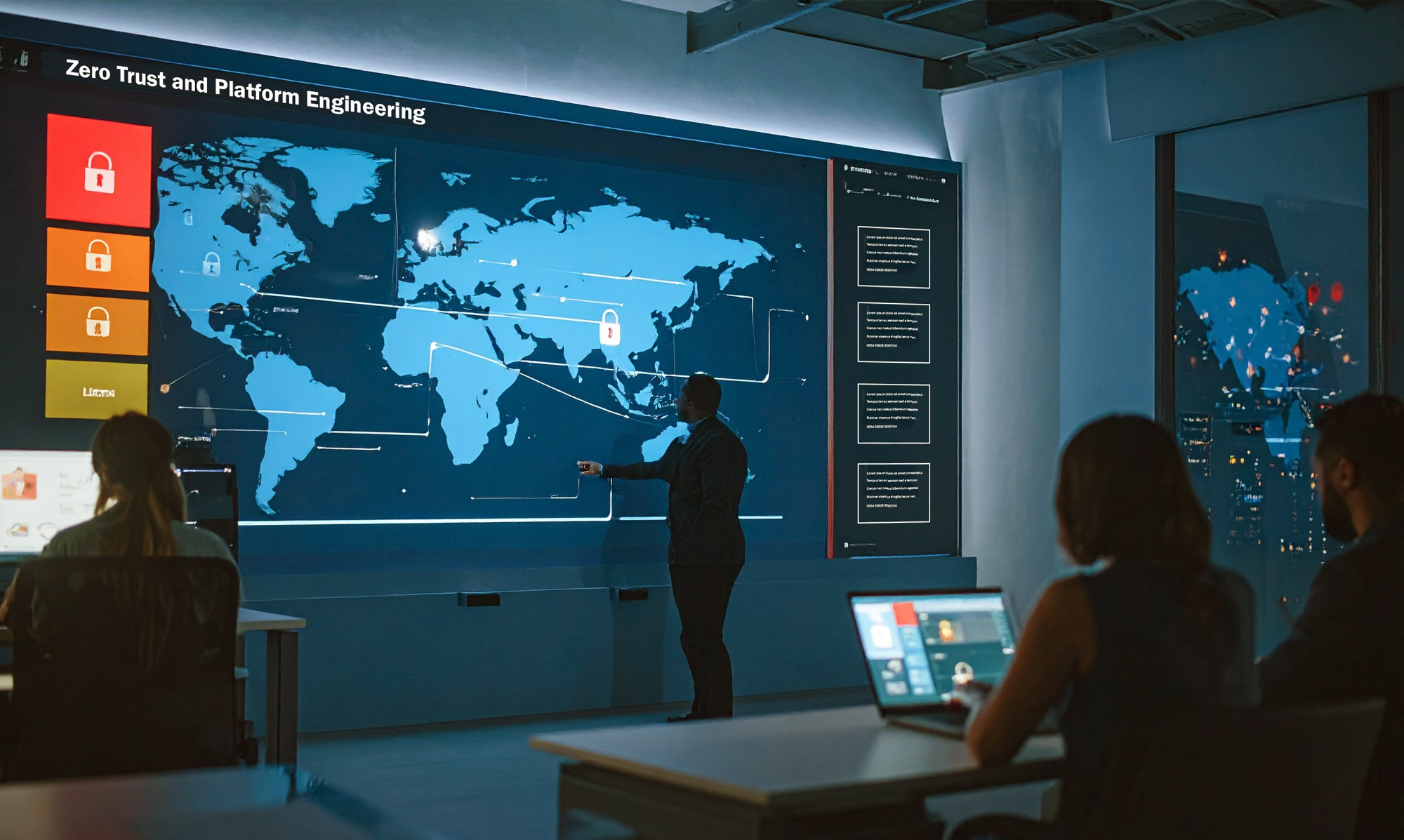
US Department of State and an American company prepare a drone defense plan for Romania. Silviu-Iulian Coșa tells Libertatea: “Their expertise is much greater than ours”

Anca Grădinaru, Reporter
Updated October 19, 2026, at 7:19 p.m.
The new chairman of the Committee on Defense, Public Order and National Security of the Romanian Senate, Silviu-Iulian Coșa (PNL), revealed in an interview with Libertatea that American experts will develop a plan setting out all the measures necessary for Romania to defend itself effectively against drones. The decision comes after representatives of the military, the Ministry of Internal Affairs, intelligence services, the Port of Constanța and Romanian companies spent several days at Parliament discussing legislative, technical and communication gaps in responding to foreign drones entering national territory with American experts from the Department of State and a consulting company specializing in defense.
Contents
- The US will draft and propose a drone defense plan for Romania
- National Defense Law still stalled in Parliament, two years after being put up for public consultation
- Although promulgated by the president, the Law on Preparing the Population for Defense cannot be implemented
- Can Romania request additional funding through SAFE?
- The Senate will decide how many terms intelligence service chiefs may serve
The US will draft and propose a drone defense plan for Romania
Libertatea: Senator Coșa, on Friday, October 16, you and other officials responsible for defense publicly explained, in the presence of the US ambassador to Romania, that you had just laid the foundations for what you, the Senate, called a National Action Plan for Defense Against Drones. What exactly does this plan provide for, and why is it being developed so late?
Silviu-Iulian Coșa: The event (on Friday, October 16) was organized by the US Department of State together with the US Embassy and a company, SPA (US company Systems Planning & Analysis), which provides consulting services in the field and came with experts.
It was an event at which I, as a politician, gave an opening address, considering that it was taking place in the Senate. I attended the working group’s conclusions on the last day, Friday, because the event lasted four days and was not an ordinary event in the sense of a conference or an exchange of ideas.
Quite simply, everyone responsible for national security was there, starting with the Ministry of National Defense, the Ministry of Internal Affairs, intelligence services, those who manage critical infrastructure, including economic operators, and institutions that handle communications.
There were 93 specialists, representatives of these institutions. They were organized by SPA specialists into working groups that had certain topics, all related to countermeasures against unmanned vehicles, whether we are talking about land, air or naval vehicles.
At the end, each working group reached certain conclusions, which it presented, with the United States ambassador also present.
In the immediate period ahead, and we are now talking about a few weeks, perhaps even just one week, they are to draw up this national plan of measures for countering drones.
Libertatea: So who will actually write this plan?
Silviu-Iulian Coșa: It will be drawn up by the American specialists.
Libertatea: When you say “American specialists,” are you referring to those from the Department of State or from the consulting company?
Silviu-Iulian Coșa: They work together and, of course, all these documents will be brought to the attention of the Romanian authorities. This plan is not binding.
Libertatea: It helps us? That’s how I understand it…
Silviu-Iulian Coșa: Yes, it is a draft, a blueprint that will then be implemented either through legislative amendments, if it is concluded that the legislation we currently have is insufficient, or through certain acquisitions or reallocations of materials, military equipment and personnel, as they determined during these days, or through improvements to interinstitutional cooperation procedures.
Libertatea: Between Romanian institutions…
Silviu-Iulian Coșa: Between institutions.
Libertatea: Why is it necessary for American specialists to come and make a plan for us to combat drones?
Silviu-Iulian Coșa: Because their expertise in everything related to defense and national security is much greater than ours.
Libertatea: And why have we not managed to produce even a draft ourselves until now?
Silviu-Iulian Coșa: You haven’t asked me that, because I don’t know what to tell you. I have been chairing this committee for six weeks. Immediately, in the second week after I was appointed chairman, discussions began for this event.
Libertatea: Have you realized, in the six weeks since you have been leading the Senate Defense Committee, what is urgently needed?
Silviu-Iulian Coșa: First of all, the urgency was very well calculated by the American side, which came with all the necessary steps to organize this workshop.
It was a training workshop, a workshop in which everyone learned from one another because the drone problem in particular has become a widespread problem, as it is now.
We are talking about both airspace and maritime space, we are talking about an increasing frequency of drones that have gone out of control, and we are talking about this entire drone problem in a broader context, that of the hybrid war that Russia has generated and is using not only against Romania, but against all of Europe at present.
The most important element right now is to address this problem.
The drone problem is the most visible. The problem of disinformation is also visible to those who want to see it, because many people may believe that disinformation is not, in fact, made up of very well-targeted fake news stories with well-thought-out strategic objectives.
Perhaps many people consider it something normal and perfectly truthful information, ranging from the trails in the sky left by aircraft condensation to vaccines, to peace understood in the wrong way, to supposed neutrality understood incorrectly.
These are the main problems at present, from my point of view, that we must address, in addition to the bureaucratic and political problems, those that strictly concern the committee.
Libertatea: I understand that hybrid warfare, including combating disinformation, will be a subject in this plan.
Silviu-Iulian Coșa: I don’t know. My request at the briefing at the end of those four days was precisely on the communications side, to also take into account strategic communications regarding everything related to the drone problem.The entire hybrid war was not discussed, but this was my request: “Let’s establish, if we are establishing strategic objectives, objectives regarding everything related to communication about the drone problem as well!”
Subsequently, we will see how, step by step, whether we are talking about early warnings regarding the beginnings of disinformation, or actually combating erroneous information that reaches the public sphere, whether on social networks or through the mass media, we should think about what we need to do in this area.
So communication strictly concerning drones was an issue that I requested be taken into account when preparing this draft national plan on anti-drone measures.
Libertatea: Will this consulting company, which you said works together with American officials, be paid separately by Romania?
Silviu-Iulian Coșa: Romania has absolutely no issue concerning the payment of any amount. I repeat, this is an initiative of the US Department of State. They came with the company in question and, of course, the initiative also had the United States Embassy as a partner.
We were very happy to host these activities, and subsequently, to the extent that legislative amendments are needed, they will be discussed at the committee level.
National Defense Law still stalled in Parliament, two years after being put up for public consultation
Libertatea: Let’s begin the discussion about the blocked laws. Since 2024, the military has said that it urgently needs a new National Defense Law. Even now, this law has not been adopted. It has been with you, at the Defense Committee, since the beginning of this year, after it was tacitly adopted by the Chamber of Deputies last December. Why hasn’t this law been adopted?
Silviu-Iulian Coșa: Indeed, the National Defense Law is currently in the Senate, on the committee’s list of pending matters. There was an attempt, sometime in the spring, to bring this law before the committee for debate. Don’t ask me why, I don’t know… At some point, we became stuck.
We intend to proceed once we have a stable institutional partner, meaning after the possible investiture of this government or the next one.
Libertatea: Are you referring to the Ministry of National Defense now?
Silviu-Iulian Coșa: Yes, it is absolutely normal for the Ministry of Defense to be involved, not only at the General Staff level or the technical level, but also at the political level through the minister, to be involved in this project.
We will bring the law back to the table because there are certain elements that, at least from my point of view, are not mentioned in this legislation, whether we are talking about hybrid warfare, which is not explained, nor are the rules even defined there.
There are not even minimum legal provisions telling us what the state must do, what state institutions must do when they encounter an action involving hybrid warfare.
Also, regarding the National Defense Law, we have a state of peace and then we move directly to states of alert. We have no intermediate state into which we could place ourselves at a given moment.
Libertatea: So you are saying that this draft law needs to be improved, correct?
Silviu-Iulian Coșa: Yes. It certainly needs to be improved, it certainly needs to be supplemented.
Libertatea: Does that mean it goes back to the Ministry of Defense to be supplemented?
Silviu-Iulian Coșa: Not necessarily. This can also be done in the committee, of course, with the people delegated by the ministry alongside us.
Libertatea: Can you estimate when this National Defense Law might come to a vote in the Senate?
Silviu-Iulian Coșa: It would be ideal for it to come up during this session. Now, as for estimates… Considering that we are nevertheless talking about a rather unstable political environment, I would not want to make estimates that are unrealistic.
We have hearings today, we have the vote on the new government tomorrow. If the new government is invested, it is clear that we will have an institutional partner for dialogue in the person of a minister who will be there for a known period, at least until the budget is approved, if the commitments in the governing program are respected, especially the one related to the deficit target, because we have problems with money.
Libertatea: What did you ask Romania’s future prime minister, Luca Niculescu, regarding defense?
Silviu-Iulian Coșa: The protocol provides, in particular, for conditions related to how both the budget adjustment and the budget will be prepared, because Romania’s main problem, which has affected absolutely every area, social, economic, political to a great extent, financial and fiscal, is the difficulty related to money.
We had a very large budget deficit in 2024, a record in the European Union.
We must reach a budget deficit of 5.3% of GDP by the end of 2027, and the budget law must first and foremost provide for this, so that we can undertake a plan that Mr. Ciolacu signed before the European Commission.
Libertatea: Regarding defense, could the military have a larger budget next year, in 2027?
Silviu-Iulian Coșa: In the governing program, this matter of increasing the budget allocation for the military so that, by 2035, we reach 5% of GDP is the only one with both a deadline and a figure. The others have neither deadlines nor figures, which is not very encouraging.
Although promulgated by the president, the Law on Preparing the Population for Defense cannot be implemented
Libertatea: Another law that cannot be implemented is the Law on Preparing the Population for Defense. It is the law providing that young Romanians, men and women up to the age of 35, can voluntarily train with the military for four months a year.
This provision is in a law that was adopted, promulgated in January, and could not be implemented. Why? Because there is no corresponding government decision.
The Bolojan government fell in May, and because it could not issue further government decisions, this law could not be implemented. How can this problem be resolved?
Silviu-Iulian Coșa: Civil defense and preparing the population for defense are subjects that, from my point of view, must be addressed together with the National Defense Law.
So, when we open discussions with the ministry, within the committee, regarding the issue of the National Defense Law, we will also include these aspects.
These are aspects that I have already discussed informally with some colleagues, at present, and I understand that their opinion is also that we should address the issue in a unified way from this point of view.
Libertatea: So the government will not quickly issue a decision that would allow the Law on Preparing the Population for Defense to be implemented?
Silviu-Iulian Coșa: I don’t know what to tell you at the moment.
I don’t know which government. Let’s see which government, let’s see who the interlocutor is, and we will see at that time.
Libertatea: The volunteer defense training program should last four months. There are fewer than three months left in this year, and the Ministry of Defense, although it had money in the budget for this program, can no longer implement it because there are not four months left in the year.
What happens? Does it return the money to the budget?
Silviu-Iulian Coșa: Not necessarily. Theoretically, all appropriations that are not used are reset and, possibly, the money is included in the following year’s budgetary financial exercise.
However, I repeat, let’s have an institutional partner for discussion at the ministry level and we will see how this problem is resolved as well.
Libertatea: I will now quote a statement by the deputy chief of the Defense Staff, Major General Mircea Gologan, who recently said at the MOBEX exercise:
“The program for voluntary short-term enlisted soldiers, namely the four-month basic training, has not been able to begin at this time because of the Government’s inability to adopt the legal acts subsequent to Law 5 of 2006. That is the one we are talking about. We cannot influence the legislative process.”
Silviu-Iulian Coșa: You should know that it can be done through a very simple method: simply apply pressure, simply make a phone call, simply submit a request, come to one of the committee’s meetings. We have at least one meeting a week. Come to the meeting and tell us that there is a problem, that there is a draft law, that there is a law that has already been adopted and that cannot be implemented for certain reasons.
Libertatea: But could the Government have issued this government decision? Could it have, in your opinion?
Silviu-Iulian Coșa: A government decision could have been issued. I don’t know what reasons were behind the failure to issue this decision. Because, generally, the draft of a government decision is prepared by the competent ministry.
I cannot tell you at the moment whether the Ministry of Defense prepared that draft decision, whether the draft decision was acceptable and had all the approvals.
Libertatea: It prepared it, and it was sent for approval.
According to my information, this draft did not receive all the approvals before the Bolojan government was dismissed through a motion of no confidence in May. As such, it could no longer be adopted.
Silviu-Iulian Coșa: But you should know that a legislative proposal receives several approvals from several reviewing bodies, and each of them can make certain observations that can be implemented in the respective proposal, or they may not be taken into account.
And then, in a cascading process, each new reviewing body takes into account, or does not take into account, what was done and what was not done following the previous approvals.
Libertatea: Once the government changes, this draft government decision has to go through the approval procedure again, doesn’t it?
Silviu-Iulian Coșa: Normally, it should not have to go through the approval procedure again.
Libertatea: That is what happened with all the proposals.
Silviu-Iulian Coșa: Yes, it is a form of control that the government wants, but once an approval has been issued, that approval generally has a purely technical character.
It complies with the rules, it complies with everything related to budgetary procedures, there are no legislative or regulatory overlaps, and so on.
So, from this point of view, I don’t think they should have to be repeated.
Can Romania request additional funding through SAFE?
Libertatea: Many capabilities are being purchased through the European SAFE program. At this moment, has the Ministry of Defense sent the Defense Committees a new list of acquisitions, also through SAFE, using the money unspent by other countries?
There are more than 20 billion euros unspent from SAFE I, and the Romanian state could theoretically access new sums of money.
Silviu-Iulian Coșa: There are two aspects here. First of all, the SAFE program is not a procurement program. The SAFE program is a program for developing the defense industry, particularly the European defense industry and the Romanian defense industry in particular.
That is why there are those offset clauses, so that part of production, servicing, maintenance and so on is located in Romania, the percentage being somewhere around 50–60%.
From this point of view, the SAFE program has demonstrated its usefulness, considering that it allowed Romania to equip itself with certain equipment that it absolutely needed and, moreover, for this equipment to lead to the development of the Romanian arms industry.
Now, regarding the money remaining from SAFE, we are talking about sums that were not spent by Hungary and Italy in particular.
First of all, the updating of the SAFE programs for the respective countries must be finalized. We need to know that exact amount.
At present, there is a proposal for it to be allocated to cooperation or to be linked to Ukraine, not generally to the defense of the European Union, but directed strictly toward Ukraine.
There is some dissatisfaction among certain member states regarding this.
So first, the European Commission must decide where it wants to direct this money and subsequently, of course, it depends on our capacity as a country to come forward very quickly with viable projects in the direction that is decided.
The Senate will decide how many terms intelligence service chiefs may serve
Libertatea: The Defense Committee also issues opinions on draft laws that concern institutions other than the Ministry of Defense and that are part of the national security system.
And we wrote about it, you gave us a statement regarding the draft law amending the Law on the Organization and Operation of the Foreign Intelligence Service.
There was a provision there that would have allowed certain SIE officers to contribute to criminal investigations initiated against colleagues.
What is happening with this draft?
Silviu-Iulian Coșa: At present, the draft is also on the committee’s list of pending matters. It will have to be brought back for debate.
It was debated once and passed through the committee. At the level of the Senate plenary, it was sent back to the committee.
After the change of government takes place, we will have to bring it back to the committee, either to receive a report recommending rejection or a report recommending approval, depending on the outcome of the debates.
Libertatea: After Libertatea published the article about this draft, there were quite a few public reactions.
I ask you, is it good to have such a draft that would give officers from Romania’s foreign intelligence service the right to investigate colleagues, to contribute to the investigation of colleagues?
Silviu-Iulian Coșa: It was a decision based on the arguments presented at the time regarding competencies and the nature of the activity carried out within the respective service.
Libertatea: But at this moment, are there legal provisions allowing officers to be investigated if they commit criminal offenses?
Silviu-Iulian Coșa: Yes, but they are investigated by prosecutor officers from the existing prosecution offices.
Libertatea: And why isn’t it sufficient for military prosecutors to conduct such investigations?
Silviu-Iulian Coșa: I told you, considering the nature of the activities of the respective services.
But it is an issue that will be debated when the draft returns to the committee, because opinions were diverse at that time as well.
Libertatea: Are there other draft laws concerning the activities of intelligence services before the Defense Committee that you intend to discuss?
Silviu-Iulian Coșa: There is the possibility that we will resume discussions related to the draft law concerning limiting the terms of office of service chiefs.
Because, in its first stage, it passed the Defense Committee, but we are waiting for an opinion from the committee that oversees the activities of the SIE.
And depending on their opinion, we will see whether or not it is necessary to bring the respective draft law back before the committee.
Libertatea: Is that the USR draft law that provides for limiting the chiefs of intelligence services to no more than two terms?
Silviu-Iulian Coșa: Yes, yes.
Libertatea: What do you think? Should the terms be limited?
Silviu-Iulian Coșa: Ah, yes. My opinion has been expressed very clearly. Yes, I believe the terms should be limited, but I also have one vote, like all my colleagues.
Libertatea: One last question, please: Why have the reports on the activities of the intelligence services not been discussed in the plenary session of Parliament for so long, for years?
Silviu-Iulian Coșa: That is an extraordinary question to which I do not know how to respond at the moment.
Libertatea: But you are the chairman of the Defense Committee…
Silviu-Iulian Coșa: Yes, but we are not the ones who should hear them in the first place.
There are the other two committees that should do that. The Committee for the Oversight of the SRI and the Committee for the SIE.
Libertatea: Haven’t you asked your colleagues what is happening?
Silviu-Iulian Coșa: No. These six weeks have been very busy. Certain issues, I must admit, I have not yet managed to get to.
We will discuss them.
Indeed, the Ministry of National Defense must present an activity report to us. I had discussed it with colleagues from the Chamber of Deputies. The report must be presented to our joint committees.
But likewise, the course of events recently has not allowed us to deal with this as well.
We will probably do so in the coming weeks.
Originally published in Romanian by Libertatea on October 19, 2026. Translated into English and republished by Systems Planning & Analysis (SPA) with permission.
Subscribe to our newsletter
We respect your privacy.
[ Related Articles ]